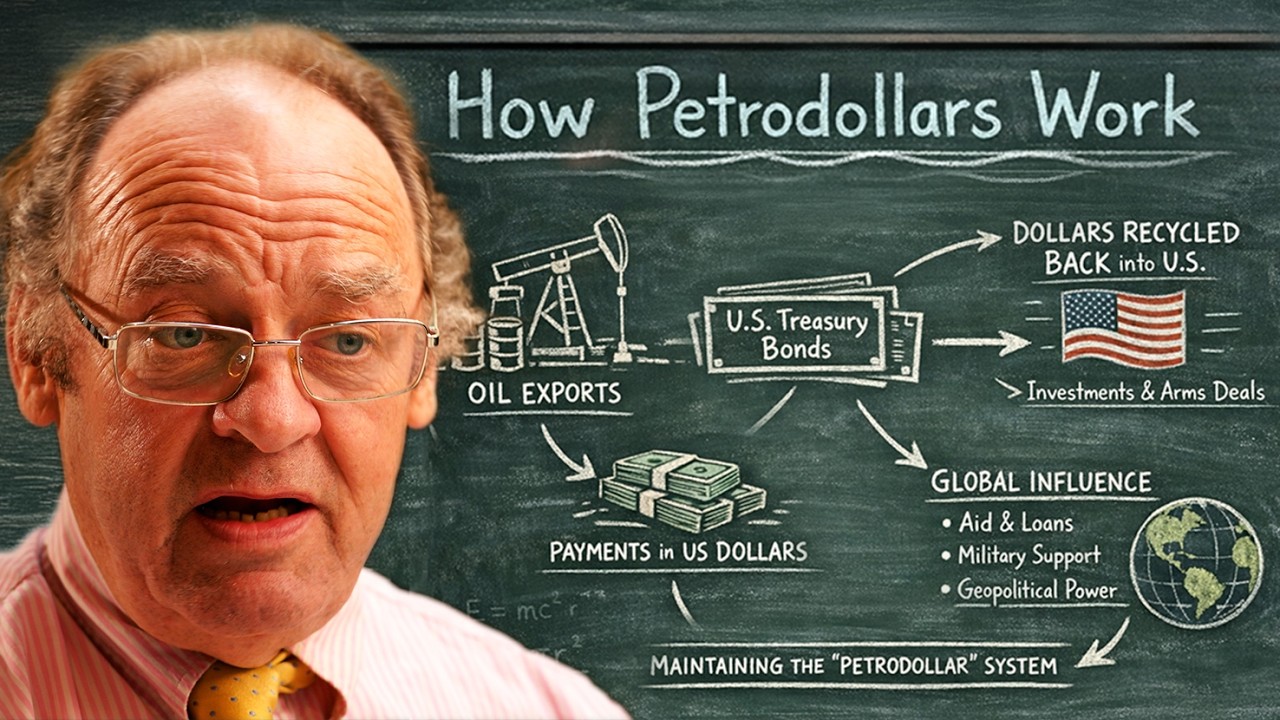
This video explains the petrodollar system -- how the US dollar became the world's dominant currency through oil trade agreements, why it remains entrenched, and how countries like China and Russia are gradually trying to reduce their dependence on it.
Why Oil Runs the World
Oil underpins virtually every aspect of the modern economy:
- Transportation -- fueling cars, planes, and ships
- Manufacturing -- plastics, chemicals, fertilizers, and everyday products
- Energy production -- electricity generation in many countries
Because oil is so essential, a massive global market exists where oil-producing nations (like Saudi Arabia) sell to oil-dependent nations (like Japan), creating the foundation for the petrodollar system.
From Bretton Woods to the Nixon Shock
The Post-War Dollar System
After World War II, the US emerged with its economy intact while much of the world lay in ruins. At the Bretton Woods conference of 1944, countries agreed to make the US dollar the center of the global financial system, with the promise that dollars could be exchanged for gold.
The Nixon Shock (1971)
President Nixon decoupled the dollar from gold, transitioning the world to a fiat currency system -- government-issued money backed not by a physical commodity but by public trust and economic stability. The dollar remained dominant due to the sheer size of the US economy and existing global transaction patterns.
Birth of the Petrodollar
The 1973 OPEC Oil Crisis
Arab oil-producing countries imposed an embargo on nations supporting Israel in the Yom Kippur War, causing oil prices to quadruple and triggering massive shortages and severe inflation in Western economies.
The US-Saudi Agreement
The deal was simple: Saudi Arabia would sell its oil only in US dollars. In return, the US would provide military protection and support.
Since Saudi Arabia was the largest oil producer, other OPEC nations followed suit. This meant any country wanting to buy oil needed US dollars -- regardless of where they were in the world.
How the Petrodollar Benefits the US
If every country needs oil and oil is sold in dollars, then every country needs dollars. This creates constant global demand, giving the US several key advantages:
- A strong dollar -- sustained by perpetual worldwide demand
- Cheaper borrowing -- the US government can borrow more easily and at lower interest rates
- Geopolitical leverage -- the US can wield financial sanctions effectively because so many international transactions flow through US banks
Petrodollar Recycling
Oil-producing countries don't just sit on cash -- they reinvest it, creating a self-reinforcing loop:
- Countries buy oil with dollars
- Oil producers earn dollars
- Oil producers invest those dollars back into US government bonds, American companies, real estate, and global markets
- The dollar stays strong, and the cycle continues
Challenges to the Petrodollar
The BRICS Push for De-Dollarization
Countries including Russia, China, India, Venezuela, and Pakistan have attempted to trade oil in alternative currencies like the euro or Chinese yuan. The BRICS alliance specifically aims to reduce global dependence on the dollar.
Why Change Is So Difficult
Moving away from the petrodollar is far harder than it sounds:
- Switching currencies disrupts contracts, hedging systems, insurance, and pricing models
- The dollar offers high liquidity -- billions can move without crashing markets
- Strong legal protections back dollar-denominated transactions
A Gradual Shift, Not a Revolution
Russia has increased oil trade with China in yuan, settled some transactions in rubles, and reduced its US Treasury holdings. China promotes yuan-denominated oil contracts and encourages trade settlements in yuan with partners. However, these nations reduce dollar use selectively -- where politically necessary or under sanctions -- while still using it when convenient. China is also leveraging the gold market as part of a broader strategy to weaken the dollar's global financial grip.