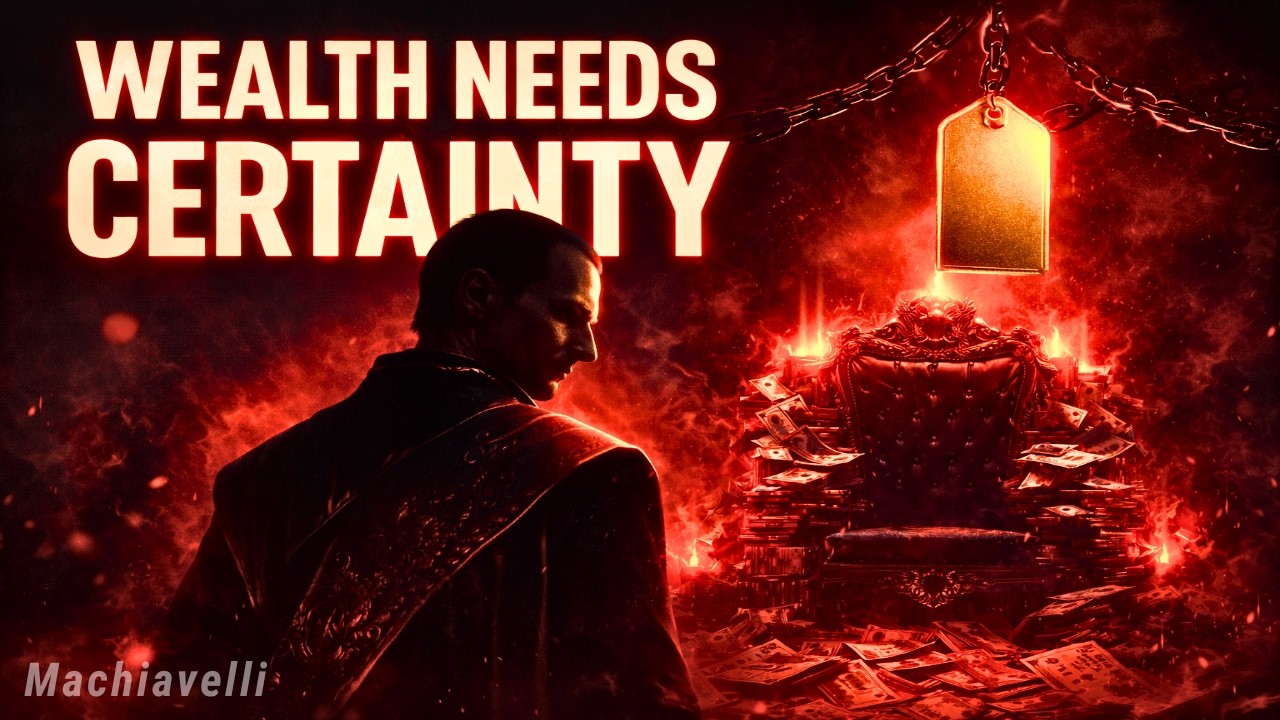
A Machiavelli-inspired framework for premium pricing built on one core principle: buyers don't resist high prices because the number is too high — they resist because the offer still feels dangerous. Price rises when doubt falls.
"The market does not reward hidden quality. It rewards visible certainty."
The Four Certainty Levers
Before price ever appears, these four levers must be in place to reduce buyer doubt.
1. Proof
- Proof answers: "Has this worked before?"
- Without proof, your offer is a story — and stories are cheap when money is on the table.
- Two consultants promise the same outcome: one says "I can help." The other shows 12 client examples with timelines and measured results. The second feels safer and gets paid more.
- Forms of proof: outcome proof, process proof, diagnostic proof, reputation proof, and specificity itself (which reveals mastery).
- If you're new, show your standard, your thinking, your filters, what you refuse to do. Competence becomes believable when it starts drawing lines.
2. Process
- Process answers: "What exactly happens after I say yes?"
- Chaos is expensive. Clarity is premium. A buyer pays more when the future feels ordered.
- Weak: "We'll discuss your goals and build a custom path." Strong: "First we diagnose. Second we build. Third we test. Fourth we refine."
- Intelligence without structure feels dangerous. Instinct without structure feels inconsistent. Structure converts trust.
3. Guarantees
- Guarantees answer: "If this goes wrong, who bleeds first?"
- Weak guarantee: "If you're unhappy for any reason, full refund." Sounds unstable, attracts wrong buyers.
- Strong guarantee: "If we don't deliver agreed milestones by this point, we continue at our expense." Precision is power.
- You don't use guarantees to compensate for a weak offer — you use them to reveal the strength of a strong offer.
4. Constraints
- Constraints answer: "Is this offer disciplined enough to trust?"
- Too much openness creates doubt — when nothing is bounded, nothing feels controlled.
- Examples: application-only, minimum commitment, limited slots, defined communication windows, clear revision limits, qualification before acceptance.
- The wrong buyer should feel friction — power grows when your structure stops trying to serve everyone equally.
The Core Insight
"Amateurs negotiate price. Operators engineer certainty."
When all four levers are in place, the same number that sounded expensive before now sounds justified — sometimes even safe. What people call "expensive" is often just unclear risk wearing a number. Every discount is a tax on the trust you failed to build in advance.
The bottom line: Price doesn't create resistance — it reveals resistance that already existed. When a buyer pushes back, stop asking "How do I defend the number?" and start asking "Where is the doubt still?"