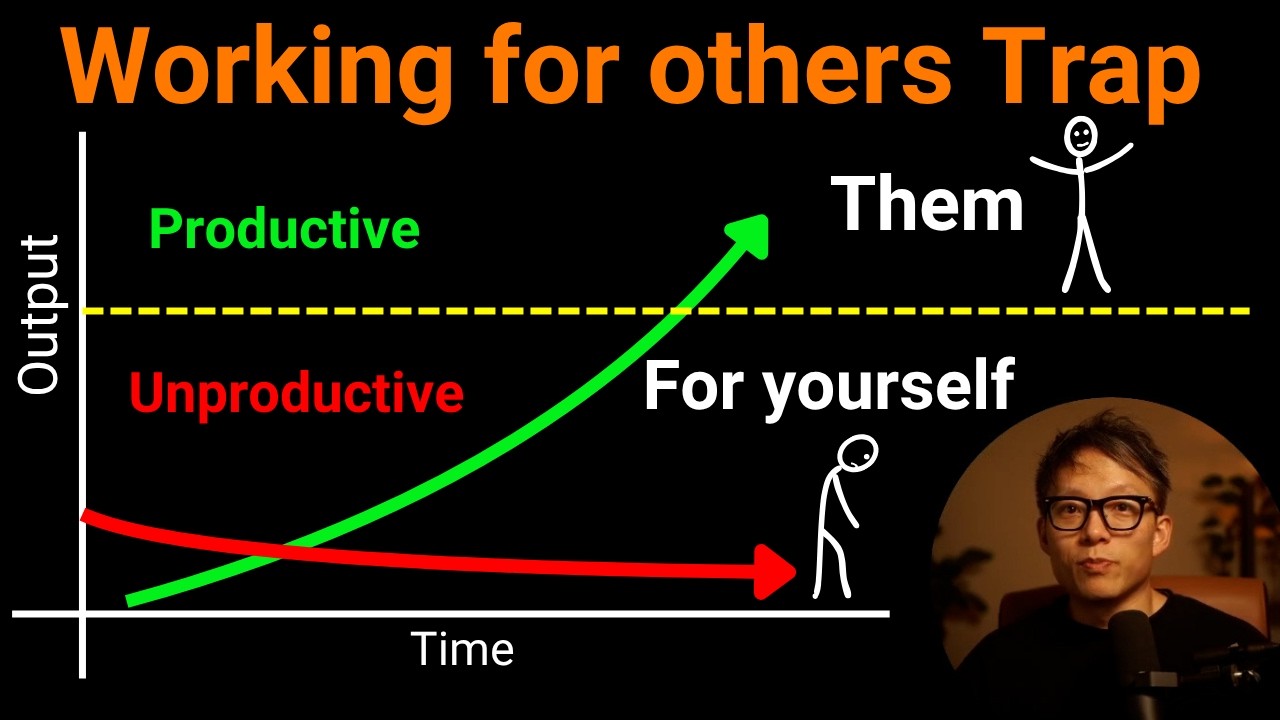
Highly capable people often deliver extraordinary work for others but stall on their own projects. The culprit isn't laziness or lack of capability — it's environment. This talk explores the mechanism and how to rebuild conditions that activate your "performer" self.
The Strategist and the Performer
Inside you are two characters: the strategist (planner, deep thinker, great at complexity) and the performer (executor who faces discomfort and performance nerves). Your environment acts as a switch — the right conditions put the performer in the driver's seat, the wrong ones lock you into strategist mode of planning, researching, and analysis paralysis.
- Working for others: deadlines, money, expectations, and watching eyes push you into performer mode.
- Working for yourself: no pressure, vague priorities, and "I'll do it later" leave the performer dormant.
The Racehorse Metaphor
A racehorse on a track knows exactly what to do — finish line, competitors, stakes. Drop that same horse into an open field and it wanders aimlessly. Freedom without structure doesn't unlock performance; it smothers it.
"You are not broken, you're just deconditioned. Your performer hasn't had a chance to operate in their own skin."
Why self-imposed fixes fail
Habit trackers, self-imposed deadlines, discipline, and motivation all collapse because self-created environments feel optional and negotiable. There's no emotional weight — nothing you truly care about is on the line — so there's no activation.
Building Your Own Racetrack
The strategist can't force the performer to act. Its real job is to create conditions that activate the performer automatically, the way working for others does.
What a real racetrack contains
- One clear, visible output you're running toward.
- A hard deadline with a date, time, and an important person who can see it.
- Real stakes — a painful cost if you don't follow through.
- Emotional weight — other people involved, so it feels tied to your reputation.
Containers that activate the performer
- Presenting work ("show and tell").
- Active challenges, competitions, or sprints with other people.
- Workshops and cohort-based project work.
Everyone's racetrack is slightly different — some people respond to competition, others to group coordination, others to a fixed audience deadline. The point is to experiment and learn what activates your performer.
The Bottom Line
You don't need more information or training — you need a training ground. Every time you avoid discomfort, your performer weakens; every small action becomes evidence that it can show up. Close the gap between the strategist you've trained for years and the performer you've neglected, and the same capability you give others will finally land on your own projects.